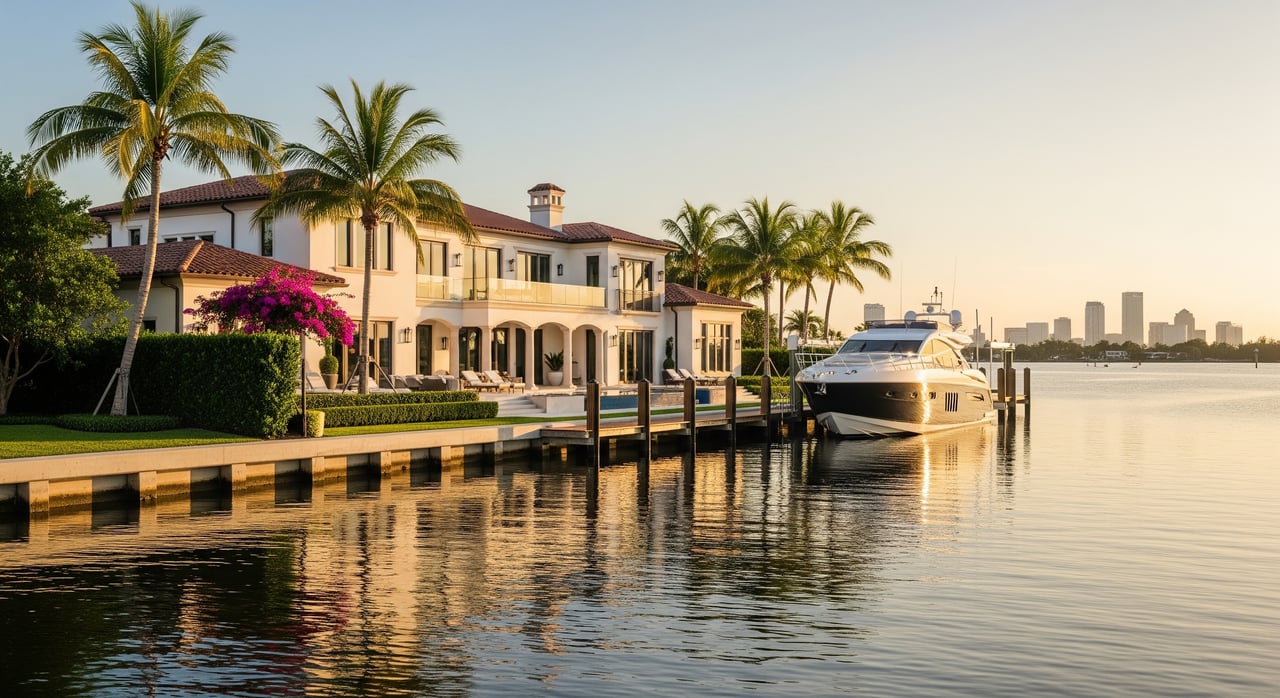
Seller’s Guide to Davis Islands Waterfront Pricing
Wondering what your Davis Islands waterfront home is really worth? Pricing here is not one-size-fits-all. Small differences in frontage, depth, permits, or seawall condition can swing value by six figures. This guide breaks down what matters most, what documents to gather, and how to set a price that protects your net proceeds. Let’s dive in.
Davis Islands is a pair of man-made residential islands just south of downtown Tampa. You see a mix of historic bungalows, Mediterranean homes, and newer custom builds. Waterfront parcels range from interior canals to prized open-bay frontage. Limited inventory and proximity to downtown, marinas, restaurants, and cultural amenities create strong premiums, with open-bay sites the most scarce.
Open-bay frontage typically commands the highest prices thanks to unobstructed views, deeper water, and direct access to Tampa Bay. Canal frontage is more common and varies widely. Distance to the bay, canal width and depth, and whether you pass under fixed bridges all affect boating and value. If your canal offers wide basins or is at the head of a canal with better turning room, that can be a plus.
Orientation influences daily experience and pricing. West-facing open-bay lots that capture sunset views often earn premiums. Privacy, exposure to prevailing winds, and whether views are panoramic or partially obstructed all factor into buyer perception and appraiser adjustments.
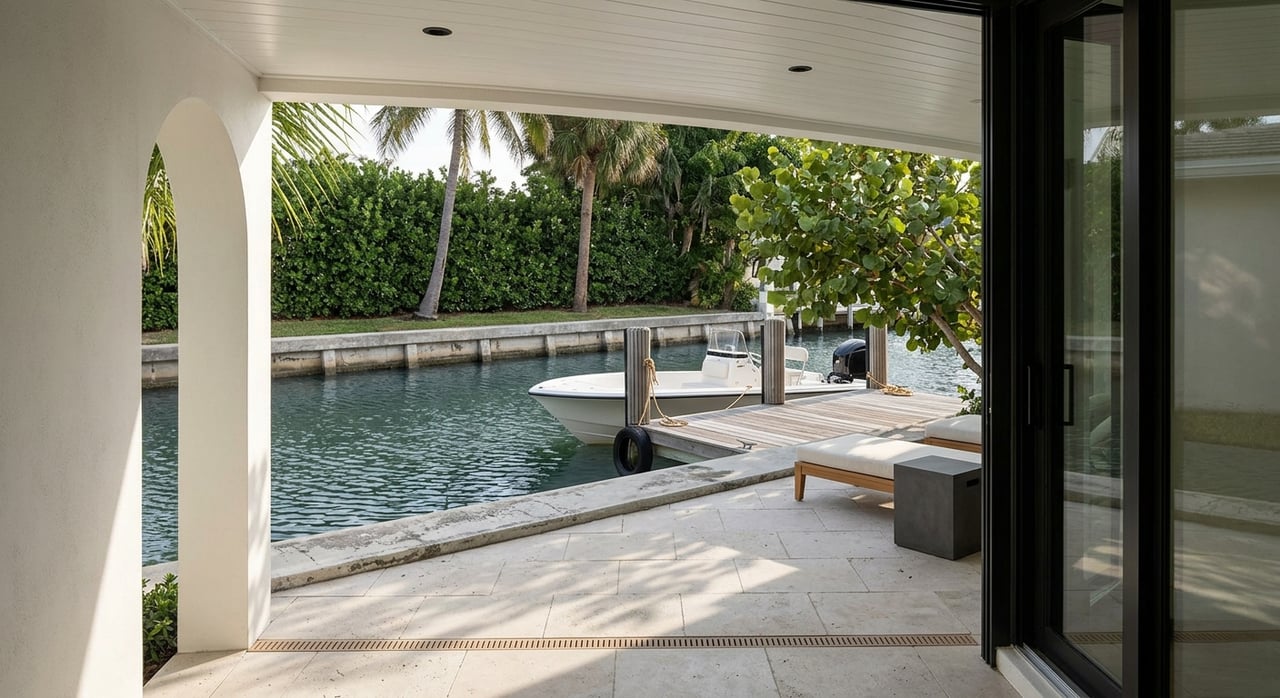
Dock features are major value drivers. A well-built, permitted dock with power, water, and boat lift increases marketability. Water depth at mean low tide determines what size vessel can be kept at the property. Bridge clearances between your dock and the bay are critical for taller boats. If possible, gather recent depth soundings or documentation from a marina or marine contractor before listing.
Linear waterfront footage is a key metric, often used in price-per-front-foot comparisons. Lot depth and usable yard area also matter for pools, terraces, and privacy landscaping. Side setbacks, easements, and the buildable footprint influence long-term potential and redevelopment value. Buyers pay for both the water interface and how livable the outdoor space feels.
The seawall or bulkhead condition can make or break a deal. Aging or failing seawalls are a significant liability and often lead to price concessions. Expect buyers and appraisers to treat replacement as a capital expense. To keep control of your pricing narrative, secure a recent seawall inspection and obtain written estimates from licensed marine contractors.
Renovation level still matters. Turnkey interiors, quality finishes, and updated systems support higher pricing. On the water, coastal resilience features carry extra weight. Impact-rated windows and doors, corrosion-resistant materials, and elevated mechanicals all reduce risk and insurance costs, which increases buyer confidence.
Many Davis Islands properties are in FEMA Special Flood Hazard Areas like AE or VE. Your flood zone and Elevation Certificate are often required by buyers, lenders, and insurers. You can verify your designation using the FEMA Flood Map Service Center. For longer-term context on sea-level scenarios, review NOAA’s Sea Level Rise Viewer.
Florida’s insurance market has seen premium increases and changing carrier availability, especially for wind and flood coverage. High premiums or limited options can narrow the buyer pool. Document your current premiums, any mitigation features, and past claim history so buyers can underwrite carrying costs. For statewide insurance context, consult the Florida Office of Insurance Regulation.
Shoreline work usually requires permits. Docks, lifts, seawalls, and floodplain development are permitted locally through the City of Tampa, with state or federal permits sometimes needed for certain projects. Properties with properly permitted shoreline structures and clear records are easier to sell at a premium. Learn more at the City of Tampa Development Services.
Appraisers primarily use the sales comparison approach. The best comps match waterfront type, frontage, docking capability, and orientation within Davis Islands. Price-per-front-foot is a helpful yardstick, then adjusted for depth, dock condition, view quality, lot depth, and the home itself. Expect specific adjustments for open-bay premiums, head-of-canal locations, lift and vessel capability, seawall condition, and elevation relative to base flood.
For newer custom homes or when few comps exist, the cost approach helps establish a floor by looking at replacement cost less depreciation. Income analysis is rarely primary for owner-occupied homes, but can matter if the property is income-producing and local rental rules allow it.
Gathering documentation upfront reduces buyer uncertainty and helps you defend your price.
Price with the waterfront first, then layer in the home’s condition and coastal resilience features. Be realistic about known capital needs such as seawall work, and use written estimates to quantify any concessions. Consider a pre-listing appraisal or pre-inspections to reduce renegotiations and speed up underwriting. If bridge clearance, canal depth, or permits limit certain vessel types or future improvements, address those early so they are priced in rather than discovered later.
Selling a Davis Islands waterfront home is as much about expert storytelling as it is about data. You want a team that understands the nuances of frontage, depth, and dockage, and that can package your home with premium marketing to attract qualified buyers. Onyx Collective pairs boutique, founder-led service with Compass tools like Concierge for financed pre-listing improvements, plus professional photography, staging, 360 tours, and targeted distribution. Ready to set a winning price and protect your net proceeds? Connect with Onyx Collective to get started.
Stay up to date on the latest real estate trends.
We bring a fresh and dynamic approach to real estate, driven by a commitment to excellence and a passion for helping our clients achieve their dreams.

3615 BROMLEY GRAND AVE #230 TAMPA FL 33607