Why Hyde Park Tampa Historic District Home Prices Vary
Pull up two different pages for the same neighborhood right now and you'll get two different numbers. One shows Hyde Park homes selling for a median of $554,000 over the three months ending May 2026, down 47.3% from the year before, with 12 homes sold that month. Another, labeled "Hyde Park Historic District," shows a median of $590,000 for the three months ending March 2026, down 20% year over year, with 33 homes sold that month. Same neighborhood name. Same stretch of Tampa. Two different boundaries, two different sales counts, two different stories about where the market is headed.
Neither number is wrong. They're measuring different things, and the gap between them tells you something more useful than either figure alone: in a neighborhood this size, the median isn't a stable read on value. It's a description of which homes happened to close during each three-month period.
Twelve sales in May. Thirty-three in March. Those are monthly counts, not totals for the full three-month periods. A shift in the mix of homes selling over those periods can move a three-month median by tens of thousands of dollars without any home in the neighborhood actually losing or gaining value. A 47.3% year-over-year drop sounds like a neighborhood in freefall. It's more likely a signal that the mix of homes selling this May skewed smaller or more modest than the mix that sold last May, not that a $1 million Hyde Park home from a year ago is now worth half that.
This matters for anyone comparing Hyde Park to another South Tampa neighborhood using portal medians as a shortcut. The shortcut works fine in a market with hundreds of monthly sales. It breaks down in a historic district where inventory is genuinely scarce and every closing carries outsized weight in the average. If you're serious about a specific block, the median is a starting point for a conversation, not a number to negotiate from.
The price confusion is a symptom. The deeper issue is a boundary that changes what you can legally do to a house once you own it.
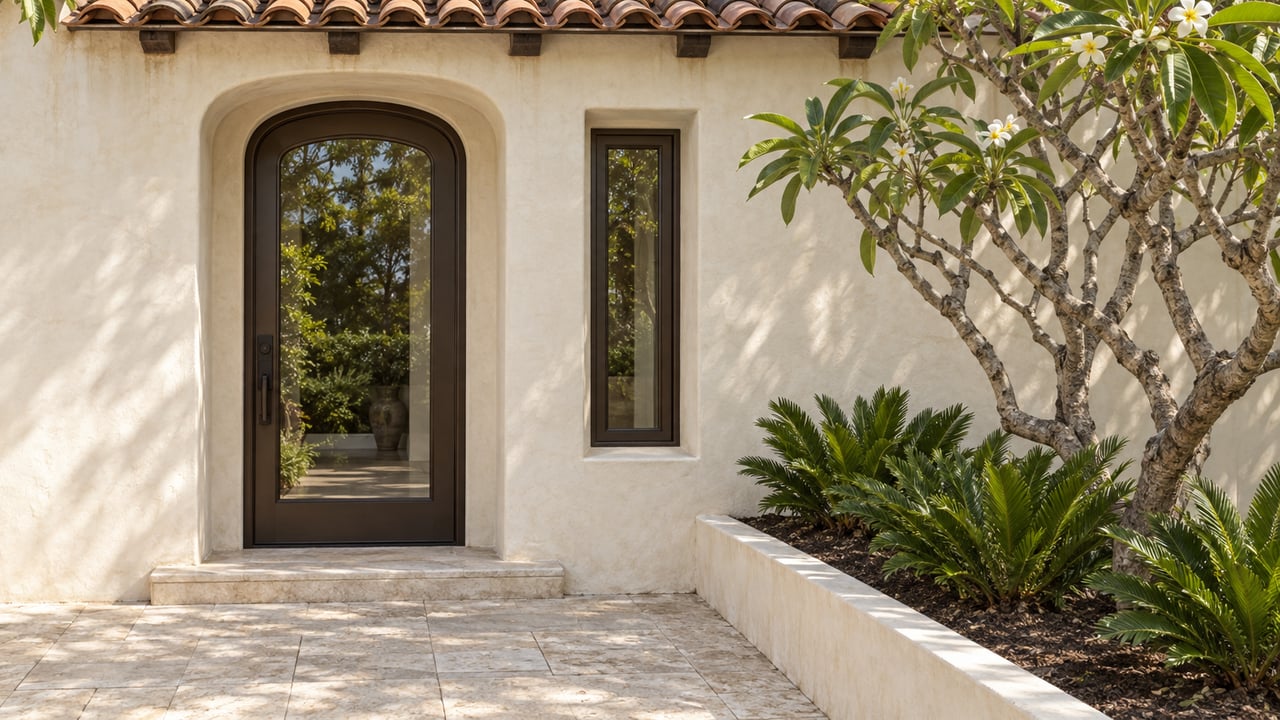
Hyde Park's historic designation isn't one continuous, unchanging line. The core district was listed on the National Register of Historic Places on March 4, 1985, covering roughly 560 acres and about 1,264 contributing buildings, bounded by the Hillsborough River and Hillsborough Bay to the east, Howard Avenue to the west, and Kennedy Boulevard to the north. Every exterior change inside that boundary, additions, new construction, some repairs, has been routed through the city's Architectural Review Commission and its Certificate of Appropriateness process for four decades.
Then, effective January 5, 2023, the district expanded north to bring in an additional 184 buildings across the Hyde Park Spanishtown Creek Civic Association and Historic Hyde Park Neighborhood Association areas. The city's own historic preservation office confirms the effective date and building count. Those homes are subject to the exact same design guidelines and Secretary of the Interior standards as the 1985 core, but the paperwork trail is only three years old.
| Boundary | Effective Since | Coverage | ARC Review Required |
|---|---|---|---|
| National Register Historic District | March 4, 1985 | ~1,264 contributing buildings, 560 acres | Yes, four decades of precedent |
| 2023 Expansion Area (Spanishtown Creek / Historic Hyde Park North) | January 5, 2023 | 184 additional buildings | Yes, only since 2023 |
| North Hyde Park (separate neighborhood near University of Tampa) | Not a historic district | Different footprint entirely | No |
A house in the original core has decades of Certificate of Appropriateness filings behind it, meaning a buyer can often find precedent for what the ARC has and hasn't approved on that specific street. A house in the 2023 expansion area is still building that record. An owner who bought before January 2023 assuming their block was outside city review may not have adjusted their renovation habits yet, and a buyer touring that same house should ask directly whether any exterior work since 2023 went through the certificate process or not.
The process itself is worth seeing in action. As Citizen Portal reported, on November 6, 2025, the Tampa Historic Preservation and Architectural Review Commission unanimously approved a Certificate of Appropriateness for renovation and flood adaptation work at 825 Bayshore Boulevard, a contributing American Foursquare built in 1922. The application sought to modify and elevate the house while preserving its historic massing, and the commission attached conditions limiting new curb cuts and protecting neighboring properties.
The report also quoted a representative for the owners describing the goal at the hearing:
"to preserve our home, protect it from flood waters and create a safe space for our family"
That single filing shows what the review actually covers for a historic property near the water: not just paint colors and window trim, but structural elevation, driveway configuration, and stormwater handling, all vetted against the Secretary of the Interior's standards before a shovel goes in the ground. Transportation permitting and final building review still had to follow the ARC approval. For a buyer weighing flood adaptation work on a Bayshore-facing property, that's the realistic sequence and timeline, not a single permit pulled and closed.
Search results compound the confusion. Tampa has a second, unrelated neighborhood sometimes shortened to a name close enough to cause mix-ups: North Hyde Park, located west of downtown and adjacent to the University of Tampa. It's a separate area with its own character and its own trajectory, near downtown and the Riverwalk. It carries no historic district designation and no Architectural Review Commission oversight.
If a listing aggregator or a quick search pulls in "Hyde Park" results without distinguishing between the two, you can end up comparing a 1920s contributing bungalow under ARC review to a newer build in an entirely different part of town with different renovation freedom and a different price ceiling. The name overlap is coincidental. The regulatory and architectural realities are not.
Before treating any quoted median as comparable across two properties, confirm three things. First, check the parcel against the city's official historic district map rather than relying on a portal's neighborhood label, since boundaries between the original 1985 district and the 2023 expansion aren't always obvious from the street. Second, ask whether any exterior work on the specific house went through the Certificate of Appropriateness process, and if so, whether it was staff-approved or required a public hearing, since that history tells you how the ARC has treated similar requests on that block. Third, if you're financing above roughly $832,750, NFM Lending lists that as Hillsborough County's 2026 conforming loan limit, so you're likely looking at a jumbo loan rather than conventional financing, which changes your down payment and reserve requirements regardless of which Hyde Park median you started from.
None of this makes a historic Hyde Park purchase more complicated than it's worth. It means the research has to happen at the parcel level, not the neighborhood label level. We've written before about what it takes to present a historic Hyde Park home for sale once you understand that context, and the same due diligence applies just as much on the buying side.
How do I find out if a specific Hyde Park address is inside the historic district? The City of Tampa's Architectural Review and Historic Preservation office maintains official district maps and can confirm parcel status directly. Portal boundaries and neighborhood labels aren't a reliable substitute for that confirmation.
Does being in the 2023 expansion area change anything if I'm not planning renovations? Day to day living, no. It becomes relevant the moment you plan any exterior change, from re-roofing to fencing to elevating the structure, since that work needs a Certificate of Appropriateness regardless of which side of the 2023 line the house sits on.
Why do two listing sites show different median prices for the same neighborhood? They're often drawing different boundary polygons for what counts as "Hyde Park," and with a limited number of monthly sales, the specific homes that happen to close in a given quarter can swing the median significantly without reflecting a broader shift in value.
Is North Hyde Park part of the historic district? No. It's a separate, unrelated neighborhood near the University of Tampa with no Architectural Review Commission oversight, and the naming similarity is coincidental.
If you're trying to make sense of a specific Hyde Park address rather than a neighborhood-wide average, Onyx Collective can pull the parcel-level history, including whether the house falls inside the 1985 core or the 2023 expansion, before you write an offer.
This article is general information, not legal, tax or financial advice. Consult a qualified professional about your situation.
Stay up to date on the latest real estate trends.
We bring a fresh and dynamic approach to real estate, driven by a commitment to excellence and a passion for helping our clients achieve their dreams.

3615 BROMLEY GRAND AVE #230 TAMPA FL 33607