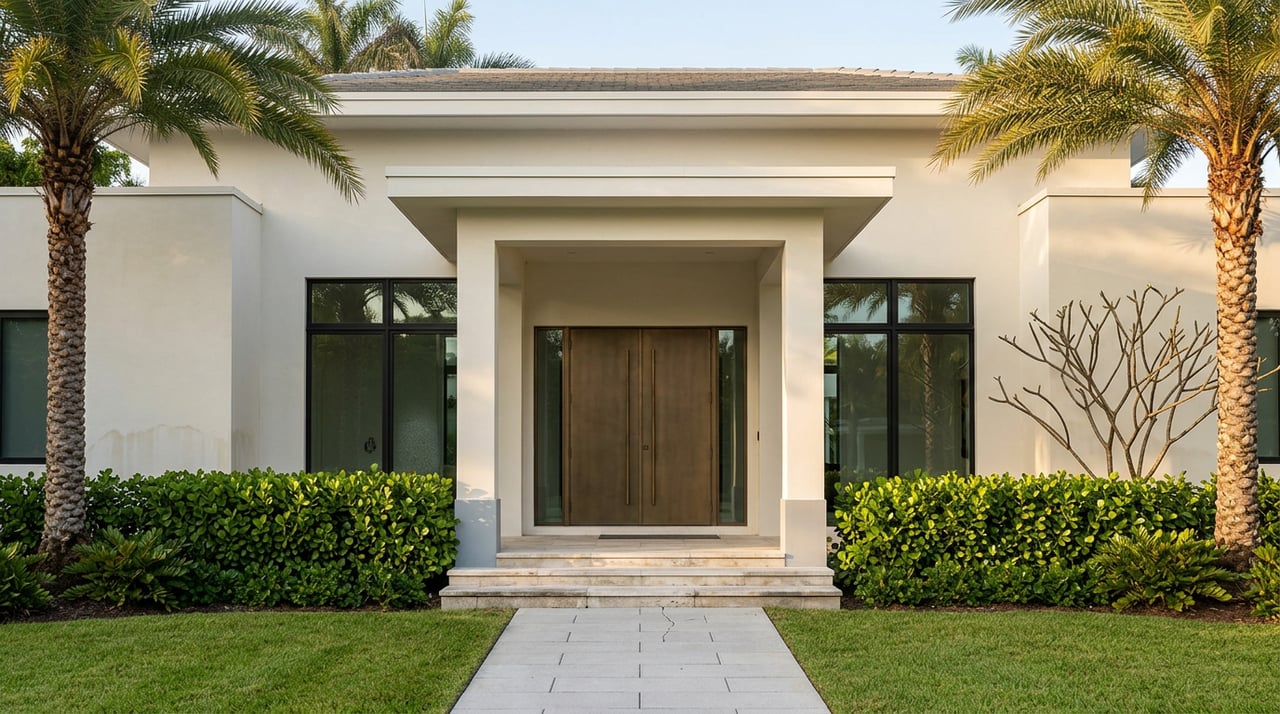
In Bayshore Beautiful, The Median Price Is Hiding Two Very Different Markets
Pull up four listing portals for Bayshore Beautiful this month and you will get four different numbers for the same neighborhood. Zillow puts the average home value at $1,014,755 as of the end of June 2026. Redfin's median sale price for May 2026 comes in at $1,061,880. Realtor.com quotes a median listing price closer to $1.1 million to $1.15 million for June, with homes selling at 95 percent of list. Pull the trailing twelve months of closed sales instead of a single month, and the median jumps to $1,300,000, down 23 percent from the year before.
None of these numbers is wrong. They are measuring different slices of the same streets, and the spread between them is the first sign of something local brokers already know and most buyers learn the hard way. Bayshore Beautiful is not one market wearing a single median price. It is two markets, sitting on the same blocks, moving in opposite directions.
Brokers who track closed sales here independently describe the same split. One team pulling data from ZIPs 33611 and 33629 puts the trailing twelve-month median at roughly $1.3 million, down 20 to 23 percent from the 2022 to 2023 peak, but the correction is not spread evenly. The boulevard-frontage tier, homes at $2 million and above, has taken the sharpest hit. Interior-street homes under $1 million have held their value through the same period.
A local team that watches the neighborhood's day-to-day comps puts it more bluntly: Bayshore Beautiful is really two markets on the same block. Original 1920s bungalows and mid-century homes sit next to brand-new custom builds, and the sale price is being set by land value and the renovation-versus-teardown math more than by the house itself.
A Serhant broker associate who has worked the area for about 12 years put a number on how wide that gap runs inside a single reported median. When the median is quoted around a million dollars, he says, that can still include homes selling for $700,000 or $800,000, and smaller ones under 1,000 square feet closer to $600,000, depending entirely on where the property sits.
This line is not arbitrary and it is not new. It goes back to how the ground itself was built.
Bayshore Boulevard exists because Alfred Swann and Eugene Holtsinger dredged and filled swampy bayfront land starting in 1906 and 1907 for their Suburb Beautiful development, laying the first mile of seawall and streetlights along what became the boulevard. The interior streets came later, built out during the 1920s Florida land boom on higher, naturally drier ground, which is why Mediterranean Revival and Colonial Revival homes from that decade still define those blocks today. Bayshore Royal, Tampa's first high-rise, went up near the northern edge of the boulevard in 1924, and Hillsborough County finished the seawall and balustrade from Howard Avenue to Gandy Boulevard by 1926.
That history means the boulevard sits on filled land close to the water, and the interior sits on the original, higher grade a block or two back. A century later, that difference in elevation is exactly what FEMA measures for flood zoning, and flood zoning is exactly what now separates these two markets on paper as much as on the ground.
The city's own maintenance crews run into the same divide every few years. In September 2025, Tampa began its largest Bayshore Boulevard landscaping replanting since 2018, after storm surge the previous December left enough residual salt in the soil that crews had to wait through a dry stretch before the ground could support new plants. That is not a problem the interior streets share. It is a problem that comes with sitting on reclaimed bayfront ground.
The zoning difference stops being abstract once you attach numbers to it. Financed homes directly on Bayshore Boulevard, or on the lowest interior streets, generally sit in FEMA's AE or VE flood zones, where flood insurance is required and can run $2,000 to $6,000 or more a year for bayfront property. Move a block or two inland into Zone X, and flood insurance often is not required at all, and where it is carried voluntarily it can run as low as $400 to $800 a year.
New construction shows the same split in a different unit. Interior Bayshore Beautiful custom builds generally run $2.5 million to $5 million. Add direct boulevard frontage to the same size home and the price climbs to $6 million to $15 million or more, once the lot premium and elevation engineering are priced in. Homeowners insurance on bayfront property in South Tampa has climbed 60 to 80 percent since 2020, a number that shows up directly in what boulevard sellers can ask and what boulevard buyers are willing to carry.
Hurricane Helene made the distinction unavoidable for anyone still pricing the boulevard and the interior as the same product. When storm surge came up from Hillsborough Bay at the end of September 2024, it flooded ground-floor living space along the boulevard and pushed enough homes past FEMA's 50 percent substantial-improvement threshold that full elevation, not just repair, became the standard answer for rebuilding there. Design-build teams working the neighborhood now treat elevation as the first design decision on any boulevard-fronting project rather than something worked out later in the process.
Two homes can carry an identical asking price in Bayshore Beautiful and represent almost nothing alike once you account for what happens after closing. A renovated 1920s bungalow two blocks off the water in a lower flood zone can carry a fraction of the annual insurance cost of a comparable home directly on the boulevard, even at matching square footage and list price.
Days on market tell a version of the same story. Average time on market in the trailing data runs around 65 days, up from roughly 45 a year earlier, and expanded inventory has given buyers more negotiating room than at any point since 2020. That leverage is not spread evenly across the neighborhood. It is concentrated where the correction is happening, on the boulevard side, while well-priced interior homes in the Plant High School attendance area are still moving quickly.
For sellers, the same split cuts the other way. A property a few streets off the water can be in a completely different market than a property fronting the boulevard, even if both carry the Bayshore Beautiful name and a similar list price. Pricing one against the other's recent comps is how listings sit for months waiting for a buyer who was never going to show up.
Does every home in Bayshore Beautiful require flood insurance? No. Flood zone designation is parcel specific. Homes directly on Bayshore Boulevard or on the lowest interior streets are commonly in FEMA AE or VE zones, where insurance is required for financed purchases. Homes further inland are often in Zone X, where coverage is optional and considerably cheaper.
Is the interior market immune to rising insurance costs? No, but it has been affected less. Rising Florida homeowners insurance touches the whole neighborhood. The steepest increases and the sharpest price corrections have concentrated on the higher flood-risk boulevard tier rather than the interior streets.
How do I find out which flood zone a specific property sits in? Request the current FEMA Flood Insurance Rate Map determination and an elevation certificate for the exact address before making an offer. Zone designation and premium cost can change from one parcel to the next, even on the same block.
If you are weighing a purchase or a sale in Bayshore Beautiful, the address matters more than the average. Onyx Collective can walk you through what a specific parcel's flood zone, elevation, and recent comparable sales actually mean for your numbers. Get your free home valuation to start with the facts on your street, not the neighborhood-wide average.
Stay up to date on the latest real estate trends.
We bring a fresh and dynamic approach to real estate, driven by a commitment to excellence and a passion for helping our clients achieve their dreams.
3615 BROMLEY GRAND AVE #230 TAMPA FL 33607